Showing posts with label 1972. Show all posts

Sunday, March 19, 2023

Shapes of Things - Jeff Beck and the Yardbirds


Shapes of Things
Jeff Beck and the Yardbirds
Springboard  SBD-4039
1972

I was very sad to learn of Jeff Beck's passing.  After Hendrix he was my favorite rock guitarist and I worshipped him like a god when I was a teenager and I still consider his music to be an important part of my life.  This is hardly the record to honor him by, I think "Yardbirds" or any Yardbirds comp would be more appropriate not to mention "Truth" by the Jeff Beck Group or "Blow by Blow."  However this is the album I've chosen and it was also the album I reached for when I heard he died even though it is a skimpy and shoddy record by a low budget record label that was slightly above bootleg level.  Cratediggers of my generation may recall seeing bargain priced albums by Springboard in the bins.  They put out records with obscure music by famous artists of the time generally from early in their careers and of dubious legality.  I think it highly unlikely they were paying royalties on this stuff.  To some degree you were getting what you paid for, as I recall the albums didn't even have inner sleeves to protect the vinyl.  They were rip-offs, but if you were a fan of the artist, the music was often quite interesting and hard to find.  I bought a bunch of them.  "Eric Clapton and the Yardbirds" was the first Yardbirds album I ever bought since all the Epic albums were out of print when I became interested in the band.  It is an abridged version of the show released as "Five Live Yardbirds" but it actually sounded better than that album (at least until it got remastered) and featured stage patter not on that album.  This was the second Yardbirds album I bought.  I picked it up in the mid-1970s shortly before Epic restored the band to its catalog with "The Yardbirds Great Hits" which is a better introduction to the group.  Nonetheless hearing this record for the first time blew my teenage mind.  Beck's guitar solos took my breath away.  Not having many records yet, I was accustomed to listening to mid-1970s AOR or top 40 on the radio which I largely regarded as bland, so Beck's explosive and frenetic guitar work combined with the Yardbirds' pop smarts was a revelation to me.  Only the Beatles with their superior songwriting excited me more.  There are a mere 9 tracks on the album and Beck only appears on 8 of them since "I Ain't Got You" was recorded when Clapton was the lead guitarist in the group although I love it and consider it one of his best Yardbirds tracks so I'm not complaining.  The record begins with the band's soaring 1966 single "Shapes of Things" written by band members Keith Relf, Jim McCarty and Paul Samwell-Smith.  It widely considered to be one of the first psychedelic songs although its swelling riff, driven by feedback and power chords, could also be seen as a heavy-metal prototype.  Beck's fiery solo embraces raga and jazz while fully rocking out and ends way too soon.  It is followed by an unreleased track that is a lively instrumental version of "What Do You Want?" which appeared in a vocal version on "Yardbirds."  McCarty's crisp drumming powers the song while Beck delivers a noisy smoking hot riff that culminates in a shrieking solo.  The song is far more exciting than the release track.  Relf's humorous "New York City Blues" was the b-side of "Shapes of Things."  It is a rare foray into straight blues for Beck but he delivers the goods big time.  His solo section is very compelling and majestic.  "Someone to Love" is an unreleased track that is essentially a punchier version of "Lost Woman" from "Yardbirds" with different lyrics.  Beck's solo is curiously subdued in comparison to the release version.  "For R.S.G." is actually Bo Diddley's "Here 'Tis" which the band had previously recorded live with Clapton on "Five Live Yardbirds."  This is a studio version that the band apparently recorded for the British tv show "Ready Steady Go" hence the odd title.  Both the studio and live versions are very exciting, but I give this version the edge for Beck's dazzling guitarwork.  He works all over the fret board and the call and response solo section is longer and more elaborate than the Clapton version.  This is one of the songs that impressed me the most when I was a kid and even now it still gets my heart racing.  Mike Hugg's "Mr. You're a Better Man Than I" had appeared on the American LP "Having a Rave Up with the Yardbirds" where it was one of my favorite tracks.  It is driven by a hypnotic riff and Beck's fuzz-toned solo is among his best with the Yardbirds and I would argue that it was the best rock guitar solo that had ever been recorded at that time.  It is followed by an unreleased instrumental version of "Someone to Love."  This elongated performance gives Beck plenty of room to operate and he responds with one of the most amazing guitar solos of that era or any era for that matter.  Beck begins riffing over a thunderous rhythm track driven by Samwell-Smith's throbbing bass line and McCarty's explosive drumming.  His riffing grows in strength and then erupts into orgasmic blasts of feedback and raw guitar noise.  I would say this is the greatest moment in the illustrious history of the Yardbirds.  I remember blasting this song wearing headphones as a teen and literally trembling afterwards.  This song alone justifies this record's existence.  The aforementioned "I Ain't Got You" appeared originally as a b-side and was on the U.S. album "For Your Love."  The album ends with "I Ain't Done Wrong" which also was on "For Your Love."  This is another one of Beck's best moments with the Yardbirds.  He handles the blues section and the rave-up with equal aplomb.  His soloing is so inspiring I can't resist breaking out my air guitar to play along.  So with this album you get five legitimately released songs presumably stolen without credit from Epic/EMI four of which are essential (and easily available on legitimate releases.)  You also get four unreleased songs which are extremely interesting and I would argue that "For R.S.G" and the second version of "Someone To Love" are also essential.  They have appeared on a modern CD, Sony's comp "Blues, Backtracks and Shapes of Things" and there are a bunch of foreign versions of this LP so you don't have to buy this stupid record necessarily to get this music.  However it is pretty easy to find and I love the cover picture and had it on display in my room when I was a teen.  If you are a fan of Jeff Beck or the Yardbirds this is a must-have in some form.  Maybe because I bought it so early it has an outsized importance in my mind, but it was the album that made me a fan of Beck and the Yardbirds and listening to it now about 48 years after I bought it it still sounds fresh and vital to me.  Rest in peace Jeff Beck and thank you for being such a big part of my musical life.  Recommended to people who prefer "Happenings Ten Years Time Ago" over "For Your Love."  

Saturday, July 3, 2021

Joy - Apollo 100


Joy
Apollo 100
Mega Records M31-1010
1972

I have a long history with this ridiculous record.  When I was a kid my sister took ballet classes and my mother would force me to go to her dance recitals which I regarded as torture.  At one of them however the girls danced to the title track of this album, "Joy" which is a rock version of J. S. Bach's "Jesu, Joy of Man's Desiring."  I was not into music back then but the song absolutely enthralled me.  The song was a top ten hit in the U.S. so I began to hear it occasionally on the radio although I failed to catch the artist.  You couldn't just whip out your phone and ask it what you were hearing back then, you couldn't even whip out your phone since it was hard wired into the wall of your home.  The years went by and I became obsessed with the Beatles and other 1960s bands and I lost interest in tracking down this record.  By the time I was in college I was into Bach and had acquired multiple copies of his arrangement of the song.  I didn't think I needed this version but occasionally I would hear it on the radio and realize that it still appealed to me.  Eventually more than thirty years after I first heard the song as a child I finally bought this album.  I have to admit that even now when I put it on the turntable and hear the harpsichord riff for "Joy" fading up, I still get a little excited.  The song is so kinetic and engaging I can't resist its allure.  Unfortunately that is not true for the rest of the album, in fact none of it even comes close.  Apollo 100 was a bunch of studio musicians led by keyboardist Tom Parker who seems to have specialized in instrumentals and pop arrangements of classical music.  "Mad Mountain King" is a stiff arrangement of Grieg's "Hall of the Mountain King" which is in total contrast to the effervescence of "Joy."  The song picks up steam in the end but I've heard symphony orchestras rock more convincingly than this.  "Mendelssohn's 4th" is taken from the second movement of his "Symphony No. 4 in A Major."  It is a ludicrously jaunty arrangement that is a vulgar travesty of the original work which I suppose you could argue is the most rock and roll approach one could take to this but I still don't like it.  "Evil Midnight" is an arrangement of Saint-Saëns' "Danse Macabre" that sacrifices much of the mood and atmosphere of the original for energy.  It sounds like something you would hear in Disneyland aside from the dumb drum solo.  Parker returns to Bach for "Air for the G String" which was adapted from the second movement of his "Orchestral Suite in D Major."  The beginning of the song follows the Bach model but then Parker takes it in a jazzier direction complete with a sax solo and vibes.  My fondness for the Bach original prevents me from endorsing this, but I give Parker points for trying something different.  He also has an arrangement from a more modern composer namely Leroy Anderson and his "Jazz Pizzicato" although that piece is already so pop music oriented that Apollo 100 essentially plays it as written.  Parker contributed a few of his own songs to the record.  I think the most interesting one is "Tamara" which he co-wrote with Brian Hunter and Tony Ritchie.  For the most part it sheds the classical pretentions for a pop melody and a heavy section in the middle.  Its chamber pop style suits Parker extremely well and I wish more of the record sounded like this.  His other songs are less successful.  "Exercise in A Minor" sounds like a classical pianist jamming with a samba band.  The pretty but vapid "Classical Wind" could be the soundtrack to a TV commercial.  There are two other original songs on the album not written by Parker.  "Reach for the Sky" was written by Tony Ritchie and Del Spence.  It comes closest to replicating the euphoric sound of "Joy" although it is too derivative to be truly memorable.   "Libido" was written by Apollo 100 guitarist Vic Flick and Reg Leonard and it features a pleasant melody with catchy guitar lines and a tasteful string arrangement.  It sounds like a cross between a European film soundtrack and a Belle and Sebastian outtake.  I have no regrets about buying this album but I wish more of it sounded like "Libido" and "Tamara" and less of it featured "rock" versions of the classics.  When I was younger I was into prog-rock and appreciated the idea of classical-rock fusion.  I have less tolerance for it now, but even back then I think I would have found Parker's style to be insipid.  I prefer the audacious vulgarity that Emerson, Lake and Palmer brought to their heavy interpretation of "Pictures at an Exhibition" which seems like an experiment worth trying.  Parker's approach just sounds like he is dumbing down the music to me.  The exception of course is "Joy" which does fuse the dynamic quality of rock with Bach's original music.  Bach has always been the exception that proves the rule.  From Paul Simon to Procol Harum to the Toys to the New York Rock and Roll Ensemble, Bach's music has frequently been successfully transposed to rock probably because the strength of his musical motifs lends itself to rock melodies.  I can't unconditionally recommend such a silly record especially since you can just buy the single of "Joy" and likely have all the Apollo 100 you will ever need.  However if you love "Joy" as much as I do and you come across this album (which is generally pretty cheap), you will probably find stuff you like on it if you buy it.  I don't play it much but I enjoy it when I do.  Recommended to fans of Focus.

Sunday, July 26, 2015

Hendrix in the West - Jimi Hendrix


Hendrix in the West
Jimi Hendrix
Reprise Records MS 2049
1972 


Hendrix in the West
Jimi Hendrix
Experience Hendrix Records/Sony Legacy
2011

In my post on "War Heroes" I complained about the shoddy treatment of Hendrix's legacy by greedy record companies since his death.  The Reprise issue of this record exemplifies that.  It was among the earliest of Hendrix posthumous releases.  It was already out of print when I got into Hendrix and I ended up with a used copy.  I debated with myself whether I needed the 2011 reissue but when I saw a cheap one, I decided to pick it up.  The music on both albums is outstanding, but neither version is entirely satisfactory.  The concept of the album was to create a Hendrix live album and it was largely drawn from a pair of shows in California which presumably gave the album its title.  One show featured the Jimi Hendrix Experience at the San Diego Sports Arena on May 24, 1969 and the other was two shows at the Berkeley Community Theater with Hendrix backed by Mitch Mitchell and Billy Cox on May 30, 1970 which was documented in the film "Jimi Plays Berkeley."  The album also contains a short musical excerpt from Hendrix's performance at the Isle of Wight Festival on August 30, 1970.  The San Diego show is a terrific show, one of the best I've ever heard.  It was released in its entirety on the CD box set "Stages" which is one of my favorite posthumous Hendrix release.  The second of the two shows at Berkeley has also been released on its own.  I  prefer having complete shows rather than compilations of performances.  That's hardly the only problem with the Reprise release.  The performances of "Little Wing" and "Voodoo Child (Slight Return)" on the record listed as being from the San Diego show are actually from the Experience's performance at the Royal Albert Hall on February 24, 1969.  Hendrix didn't even perform "Little Wing" at the San Diego show.  Furthermore "Voodoo Child" is misspelled on the gatefold and outer sleeve where it is listed as "Voodo Chile" and the song running order is incorrect in both places.  Such sloppiness is more worthy of a bootleg than a release from a major record label.  The reissue attempts to rectify this.  There is a handsome booklet that features a short essay by John McDermott (author of the excellent book "Jimi Hendrix Sessions") which discusses the background of the original album and the concerts it documents.  The revised album replaces the Royal Albert Hall performance of "Voodoo Child (Slight Return)" with the San Diego performance but since Hendrix didn't perform "Little Wing" in San Diego, that song is replaced by a 1968 performance of the song from the Experience's series of concerts at Winterland in San Francisco (which have been released extensively in an awesome box set.)  The album is expanded into a double album by the inclusion of three additional songs from the San Diego show.  For a double album it is a bit skimpy with two sides that are less than 15 minutes long.  There would be room to include all the San Diego concert if they wanted.  I presume they rejected "Hey Joe" because it is a little sloppy (although I still like it) but I can't imagine why they omitted the fiery performance of "Purple Haze."  The most obvious flaw in the new album is that they list the incorrect date of the San Diego show in the liner notes for the album, all the more galling since McDermott provided the correct date in his essay.  So both albums are flawed, but what about the music?  It is essential.  If you dig Hendrix you are going to want to have the San Diego show in some form.  I would opt for the "Stages" version even if it is on CD since it has the entire show in its original order and preserves Hendrix's stage patter which is typically wonderful.  The reissued "Hendrix in the West" is a decent alternative, especially since the remastered vinyl sounds great.  The highlight of the show is a 13 minute workout on "Red House" which many people (myself included) consider the best version on record.  Hendrix's epic solo is full of drama and passion, the blues doesn't get any hotter than this.  The other highlight is the smoking 10 minute performance of "Voodoo Child (Slight Return.)"  It is one of the most exciting versions of the song that I've ever heard.  It is superior to the Royal Albert Hall version on the original album although that one is worth having too.  The three other new additions from San Diego aren't quite as strong but all are worthwhile.  My favorite is the cacophonous take on "I Don't Live Today" which blows away the studio version on "Are You Experienced."  The 10 minute long version of "Spanish Castle Magic" is marred by an overly long Mitch Mitchell drum solo but Hendrix's part is outstanding.  The song also includes an instrumental version of Cream's "Sunshine of Your Love" that is uncredited on the album, probably to avoid paying royalties.  "Fire" has a lot of energy but doesn't stray far from the studio version.  The Berkeley show is nearly as great as the San Diego one.  My favorite cut is the incendiary cover of Chuck Berry's "Johnny B. Goode" from the first show.  It is the most exciting performance of that venerable classic that I've ever heard by anybody.  Either version of this album is worth buying for that track alone.  "Lover Man" comes from the second show and it is also an exciting performance with a dynamic solo from Hendrix that incorporates "The Flight of the Bumblebee."  The final Berkeley track is a rocking cover of Carl Perkins' "Blue Suede Shoes" which comes from the soundcheck for the show.  Hendrix might have just been messing around but his solo is brilliant.  It is a testament to the man's incredible genius that his soundchecks were better than other people's actual shows.  As for the other cuts the graceful Winterland version of "Little Wing" is my favorite version of that song because of its deeply soulful vocal from Hendrix but I like the forceful solo on the Royal Albert Hall performance.  Both versions are worth having.  The medley of "God Save the Queen" and "Sgt. Pepper's Lonely Hearts Club Band" from the Isle of Wight is minor but fun and it makes a nice introduction for the album.  I enjoy this record but I still don't get it.  Why not just leave the exploitative Reprise "Hendrix in the West" alone and simply issue remastered vinyl albums of the complete San Diego concert and both shows of the Berkeley performance?  That would show Hendrix the proper respect for the integrity of his performances.  I hate this cherry picking approach.  Hendrix played his music like a jazz musician.  He never performed anything the same way twice.  All his shows are worth hearing, even the weaker tracks.  That is not to say that I don't recommend this new version of "Hendrix in the West."  It sounds great and has nice packaging, it was certainly made with more care and respect than the Reprise original.  My initial impulse was to get rid of my original copy, but I worship Hendrix too much to part with any of his records.  Unless you are a devoted collector you can skip the Reprise version, the reissue is the only one you need.  Recommended to people who can't get enough Hendrix. 

Wednesday, March 25, 2015

Stories - Stories


Stories
Stories
Kama Sutra Records KSBS 2051
1972

I'm beginning to dread looking at the obituaries in the newspaper (yes I'm the kind of dinosaur who still reads print media.)  It seems like every day another rocker appears in there.  There are a bunch of them I've yet to comment on.  However seeing Michael Brown's obituary in the "LA Times" on Saturday, really hit hard.  Despite his small discography the man was one of my musical idols.  His album with the Left Banke "Walk Away Renee/Pretty Ballerina" is one of my all time favorite records. This album can't compete with that masterpiece, but I still love it.  It was the debut album by Stories the band Brown formed with vocalist/bassist Ian Lloyd after leaving Montage.  Brown and Lloyd co-wrote all the songs on the album.  It begins with "Hello People" which is a hippie utopia song driven by Brown's piano.  Lloyd has a strong vocal on the song supported by some enthusiastic gospel style back-up singing.  It gets the record off to a bright start.  "I'm Coming Home" is an upbeat song with a ragtime feel until the chorus which sounds like Badfinger.  Brown plays energetic piano throughout with a nice solo.  The song rocks out winningly at the end.  It was released as a single but didn't crack the top 40.  "Winter Scenes" is pure chamber pop with sensitive and evocative lyrics using winter imagery to describe a love affair.  Halfway in, the song abruptly shifts into a boogie with frenetic keyboard work from Brown and then alternates between chamber pop and rocking out.  "Step Back" is more of a conventional rock song with Steve Love's guitar licks out in the forefront.  Lloyd's forceful vocal carries the song.  "You Told Me" is another chamber pop song that features Brown and Lloyd's fathers playing violin (they are depicted on the back cover with their sons.)  Both violinists were professional musicians and their playing largely drives the song and gives it a baroque sound.  The song is about breaking up and heartbreak with an emotional vocal from Lloyd.  Side two opens with "St. James" which is a propulsive rocker displaying dynamic interplay between Brown's piano and Love's guitar.  It is the most exciting track on the album.  The album slows down for "Kathleen" which is a chamber pop love song.  It boasts a pair of harpsichord solos from Brown and violin support from Brown and Lloyd's fathers.  "Take Cover" is riff driven with a lumbering guitar solo from Love who also offers effective vocal harmonies backing up Lloyd.  "Nice to Have You Here" is a delicate chamber pop song dominated by Brown on harpsichord and organ.  The song allows Lloyd to demonstrate his vocal range and emotional expressiveness.  The album concludes with "High and Low" which is loaded with pop smarts - creative vocal harmonies, swelling shifts in tempo, stinging guitar solo, multi-tracked keyboards.  This effervescent, shimmering song about the turbulence of love gives the record an ebullient finish.  This is a wonderful record, one of the best of its era.  Ian Lloyd was the most talented vocalist Brown ever recorded with and his vocal strength greatly enhanced Brown's music.  He could rock out or gently croon with equal authority and grace.  His voice has an appealing grain to it, a slight raspy quality that reminds me of Robert Plant or the young Rod Stewart.  The music sounds great, brilliantly arranged and loaded with texture and density.  Like Badfinger and Big Star, Stories brought the best qualities of the music of the 1960s into a 1970s sound - short songs, creative arrangements, melodic hooks and elaborate vocal harmonies.  43 years later it still sounds great to me.  These guys should have been huge and Michael Brown should have made dozens of albums instead of a mere five.  How is it possible that guys like Don Henley and James Taylor made more records than Brown did?  How did Carly Simon and Chicago sell millions more records than Brown did?  I was around back in the 70's and I haven't a clue.  Most of the music on the radio back then was mediocre, even awful.  I hated it so much that I fled back to the 1960s for my music.  Later I realized that good music was out there in the early 1970s, it just wasn't on the radio and maybe we were just too dumb to appreciate it.  A generation that preferred to listen to the Doobie Brothers, America or the Eagles instead of Badfinger, Big Star or Stories basically got what it deserved.  It is tragic that Chris Bell, Tom Evans and Pete Ham died before they were rediscovered by a new and smarter generation of music fans, at least Alex Chilton and Michael Brown lived long enough to see their music finally embraced and celebrated.  They are both gone now, but their music will live on and if you've never heard any of it this album is a good place to start.  Recommended to fans of early Todd Rundgren.

Friday, January 16, 2015

Let's Stay Together - Al Green


Let's Stay Together
Al Green
Hi Records SHL 32070
1972

I saw an interview with Al Green a few weeks ago regarding him being the recipient of the Kennedy Center Honors.  It had been many years since I had seen him on TV and I was reminded of the man's natural ebullience and positivity.  He radiates good vibrations as much as any singer I have ever seen.  It is easy to see why he was so successful as a preacher.  I've been a fan of his for a long time.  He was one of the first soul singers I remember liking.  I was just getting into music and starting to listen to the radio during Green's rise to stardom in the early 1970s.  His classic singles were among my favorite songs at the time and when I got older and started collecting albums I was happy to add his to my collection.  Even after I got into the 1960s and discovered the great soul singers on Atlantic, Stax and Motown, Green still remained one of my favorite singers.  Although I'm not a believer, I like his gospel records too, but it is the great secular albums he recorded for Hi Records in the early and mid-1970s that I like the best.  I can't pick a single one as a particular favorite, but this one is certainly a contender.  The title song is one of the great songs of its era and one of the best love songs in rock.  It was written by Green with his producer Willie Mitchell and Al Jackson of Booker T and the MGs who played drums on the record.  The song is largely driven by the rhythm section who lay down a forceful groove that is occasionally given an additional push by the horn section and the background vocalists.  The song gives Green plenty of space to plead his case which he does with ardor and sexiness.  He sings with stylish grace and smoothness and displays his range hitting the high notes effortlessly.  It is a world class performance by a master vocalist.  I never get tired of hearing it.  None of the rest of the record can approach this fantastic song, but Green still sings his heart out through out.  "La-La For You" was written by Green and Mitchell.  It is another sultry love song.  It lacks the unstoppable groove of "Let's Stay Together" but Charles Hodges' keyboards and the horn section fill the spaces nicely and Green provides plenty of feeling.  It is one of my favorite tracks on the album.  "So You're Leaving" is uptempo and has plenty of punch courtesy of the horns and another strong rhythm track.  "What Is This Feeling" is more laid back but it still has a nice groove and a warm vocal from Green.  Side one concludes with "Old Time Lovin" which is a slow burner with a smoldering vocal from Green.  Side two begins with a cover of Eddie Floyd's "I've Never Found a Girl" which was a hit single back in 1968.  I like Floyd's version a lot, but if I had to pick one, I'd go with Green's.  He doesn't change it much.  He slows it down and let's his redoubtable rhythm section get up front and push the song's funky groove into prominence.  The biggest difference is Green's sensuous, virtuoso vocal which oozes sexiness.  The man's incomparable skill as a vocalist is even more evident in the following song, a cover of the Bee Gee's "How Can You Mend a Broken Heart."  I've never been a fan of the song, I find the original to be whiny and sappy.  Green cuts through the phoniness of the song and makes it utterly convincing.  For most of the song he sings with self-restraint refusing to indulge in the self-pity of the lyrics.  He lets the song simmer awhile before opening up and taking over the last part of the song with just the strength and authority of his vocal.  His masterful technique is stunning.  Up next is Green's original song "Judy" which sounds like filler after the drama and power of the previous two songs.  It is still tasty though.  The album concludes with another Green composition, "It Ain't No Fun to Me."  The song has a seductive groove to it which provides a solid framework for yet another supremely sexy vocal from the master.  The horn section gives the song a push in all the right places in that inimitable Memphis style.  Ho-hum just another classic album by one of the greatest singers in rock.  This is an essential purchase for anyone interested in contemporary pop music.  It sounded great in 1972, it sounds great now and it will still sound great in 2072 probably.  Plus for you single fellas out there looking for a soundtrack for date night, well look no further.  If this record can't get your special friend interested in you, then it ain't gonna happen.  Recommended to Otis Redding fans.

Saturday, September 28, 2013

You Were On My Mind - Ian and Sylvia and The Great Speckled Bird


You Were On My Mind
Ian and Sylvia and The Great Speckled Bird
Columbia KC 31337
1972

The end of the road for Ian and Sylvia Tyson after a long and wonderful journey.  Appropriately their final album was recorded at Toronto Sound in Toronto the city where they first met and began their career together.  They revived the name of their country-rock group, the Great Speckled Bird, for this album but only drummer N. D. Smart remained from the line up that recorded "The Great Speckled Bird" album.  The record gets off to a rousing start with a cover of Robbie Robertson's "Get Up Jake."  The Band recorded it for their album "The Band" but left it off the record and it was later a B-side on one of their singles.  Ian and Sylvia always had excellent taste in their choice of outside music to cover and this is no exception.  They give it a rollicking country-rock treatment with Ian delivering a thunderous lead vocal and Sylvia providing the sweet harmony vocal for the chorus.  I greatly prefer their version to the version by the Band.  Ian's "Old Cheyenne" is an evocative rodeo song, the sort of song Ian has always excelled at.  It is country-folk until the chorus where Peter Ecklund's trumpet kicks in, giving it more of a pop feel.  Sylvia sings lead on the joint Ian and Sylvia composition "Antelope" which is indeed about antelopes.  I find her plaintive vibrato-laden vocal very touching as she delivers her ecology-themed lyrics.  Sylvia also sings lead on her song "Miriam" which is one of the more unusual songs in the Ian and Sylvia catalog.  She is accompanied solely by a piano and a quartet of cellos giving the song a chamber pop sound as she sings about her lost friendship with the title character.  The traditional gospel song "Lonesome Valley" gets a funky country rock treatment notable for Jim Colegrove's big bass groove and some slinky guitar riffs from David Wilcox and Ben Keith.  The Tysons trade lead vocals on the verses and sing the chorus together backed up by harmonies from the band for a very energized and vigorous sound.  Side two opens with a new version of Sylvia's famous song "You Were On My Mind" which the duo first recorded on their classic 1964 album "Northern Journey."  The new version is a bouncy country rock version punctuated with some piercing steel guitar lines from Ben Keith and trumpet riffs from Peter Ecklund.  I can't say I prefer it to the original but it is definitely more lively.  Sylvia's "Joshua" is a traditional style folk song, although with Sylvia playing harpsichord and chimes it has a chamber pop feel to it.  Ian's "You're Not Alone Anymore" returns the album to country music.  Ian delivers a very robust and romantic vocal for this love song.  Ian also wrote "Salmon In the Sea" which is another ecology-minded ode to nature akin to "Antelope."  It is a folk song with a lovely combined vocal from the Tysons.  The joint composition "The Beginning of the End" is pure country with an emotional vocal from Ian and a beautiful harmony vocal from Sylvia.  It is a song about heartbreak and separation and I'm tempted to think it is about their impending break-up like "Everybody Has To Say Goodbye" on "Ian & Sylvia," but it lacks the personal quality of that song.  The song that I think most reflects the state of their marriage is the album closer, Sylvia's "Bill (Won't You Please Take Me Home)" which is my favorite original song on the album.  It is about a married couple who go to a party where the husband meets up with an old flame from the past.  She sees them dancing and realizes that he loves his old girlfriend more than he loves her.  The party in the song may be fiction, but the poignant quality of Sylvia's heartbroken lead vocal suggests to me that the feeling of loss she is expressing is real.  I find it very moving.  It is a powerful song that gives the album a strong finish.  I'm consistently engaged and entertained by this album, but it is bittersweet to me since it was their final record.  Since I first heard Ian and Sylvia as a teen, I've always felt a deep emotional connection to their music, they are among my very favorite pop artists.  I enjoy their solo records too, but they don't have the same resonance for me as their joint work.  The beauty, the idealism and the passion expressed in their work as a couple is inspiring to me and I'll always treasure their records.  This album is a very worthy addition to their wonderful catalog and I'm happy at least that they ended their partnership with such a fine record.  Recommended to fans of Gordon Lightfoot.

Wednesday, January 30, 2013

Beer Cans On The Moon - Ed Sanders


Beer Cans On The Moon
Ed Sanders
Reprise MS 2105
1972

This is Ed Sanders' second solo album.  I bought it because I'm a big fan of his group, the Fugs.  It is not nearly as good as the classic Fugs albums.  I like Sanders' songs with the Fugs, but I generally like his partner Tuli Kupferberg's songs better.  Sanders isn't much of a singer and I find forty unrelenting minutes of his vocalizing to be pretty tough to take.  The album is satirical in nature, but it is rarely as funny or provocative as the Fugs' best work.  One of the better songs is the opening cut, "Rock & Roll People."  It has a 50s rock and roll flavor to it and it celebrates rock and roll culture.  "Nonviolent Direct Action" is an ode to pacifism that introduces the country music flavor that permeates most of the album.  "Henry Kissinger" mocks the title figure in a heavy handed manner.  I loathe Kissinger as much as most lefties do and still this song makes me wince.  It is pure self-indulgent tedium, by far the worst song on the record.  "The Shredding Machine" has a Middle Eastern flavor to it that will be familiar to Fugs fans but then it abruptly goes country for the section about the journalist Jack Anderson for reasons I can't fathom.  The song is about the cover-up associated with the ITT bribery scandal and the Republican Party.  I guess it was topical in 1972 but I doubt many listeners nowadays know or care about it.  "Pity The Bird" is about oil spills.  Sanders' vocal really irritates me, it sounds like a fake childrens song.  The country-style "Kaw River Valley Progressive Hempune" is about a hemp-growing commune in Kansas that gets Napalm dropped on it by the government.  The song borrows from the Beatles "Happiness is A Warm Gun" awkwardly substituting "hempune on the prairie" for "warm gun."  "Beer Cans on the Moon" is another country song.  The twang Sanders uses when he tries to sing country-style gives me a headache.  The song is about space colonizers and pollution.  "Albion Crags" is my favorite song on the album and is the one that reminds me the most of the Fugs.  It is more of a rock song with some nice wailing organ lines and guitar jamming although the song exposes Sanders' feeble vocals even more than the country ditties do.  The song is a tribute to William Blake and features his poem "The Sick Rose."  "Yodeling Robot" is about an android working in an interstellar mine in love with Dolly Parton.  Not your typical pop song, that's for sure.  I'd probably like it were it not for Sanders' horrible yodeling.  "Priestess" is about a pagan cult led by an abusive priestess.  Musically it sounds like Jethro Bodine from "The Beverly Hillbillies" fronting the Incredible String Band.  The ragtime style of "Universal Rent Strike Rag" suits Sanders' wobbly warbling better than the more robust demands of country music.  He croons about a hippie utopia free from authority and oppression.  It reminds me of the early Country Joe and the Fish recordings before they recorded for Vanguard.  The album closes with the country sing-a-long "Six Pack of Sunshine" which I think is about trying to maintain optimism in the face of fears that there is no redemption for our sins.  The song actually name checks Plato and his ideas about the transmigration of souls which I'm fairly certain is a pop music first.  I've got to hand it to Sanders, he is a very creative and original lyricist.  If only he could sing.  Recommended to tone-deaf beatniks who like country music. 

Tuesday, October 30, 2012

Country Wine - The Raiders


Country Wine
The Raiders
Columbia KC 31106
1972 

This album marks the end of Paul Revere and the Raiders' long ride with Columbia Records aside from a few more unsuccessful singles.  It is also essentially the end of the group as a relevant band.  Mark Lindsay would never make another album with the group, although Paul Revere would hire a new bunch of Raiders and continue as an oldies act for decades to come, kind of a sad end to one of the best commercial American bands of its era.  I wish I could report that the band's final album was a worthy finish to a fine career, but alas it is nothing of the sort.  It is not terrible, just ordinary and dull, easily the worst of their Columbia albums.  Even the cover art is boring (although Mark's moustache on the front cover is kind of funny.)  Side one (entitled "upside") is the only part of this record that I listen to much.  The album begins with "Country Wine" which was a flop single.  The song was written by Edmund Villareal and Wanda Watkins who were in the 1960s group The Joint Effort who released a great psych-pop single "The Third Eye."  "Country Wine" sounds nothing like that song, it is very commercial pop bordering on bubblegum, you could imagine the Grassroots doing the song.  It is catchy and fun but as lightweight as a feather.   Mark Lindsay's "Powder Blue Mercedes Queen" was the other flop single off the album.  It is heavier, driven by a big rocking riff.  It sounds like a lighter version of Mountain.  It could be an ode to a hot car or a groupie, it works either way.  Bob Siller's "Hungry For Some Lovin'" features a notable resemblance to the band's classic single "Hungry" from their glory days which may be what attracted Lindsay to the song.  It is a hooky rocker punched up with some brass, it reminds me of the Guess Who.  John D'Andrea and John Porter wrote "Baby Make Up Your Mind."  D'Andrea was the group's musical arranger and he's given the song an elaborate arrangement with prominent brass.  It is more catchy commercial pop, very enjoyable if you are into that sort of thing.  Lindsay and bassist Keith Allison wrote "Take A Stand" which is my favorite song on the album, really the only song on the album that lives up to the standards of their classic work.  It is in the heavy, hard rock style the band began to explore in the latter part of their career with a nice growling, get-down vocal from Lindsay.  It features a modest political theme urging the listeners to get involved and stand up for what they believe in.  The song provides some hope that the Raiders still have something to offer, but side two (aptly entitled "downside") proves otherwise.  It opens with "Where Are Your Children."  It is a sappy song criticizing neglectful parents, it reminds me of Lindsay's solo work.  The sappiness continues with Scott English and Larry Weiss' "Ballad of the Unloved."  They also wrote the American Breed's "Bend Me Shape Me" but the song is more like another song English co-wrote, Barry Manilow's "Mandy."  That is not a compliment.  It gets worse with Alan O'Day's "American Family."  It veers pretty close to easy listening in style with banal lyrics about domestic turmoil and staying together despite it all.  John D'Andrea arranges up a storm so the song sounds kind of pretty but I still hate it.  Things improve with Allison and Lindsay's "Golden Girls Sometimes."  It is still kind of sappy but at least it is about a woman rather than some pretentious statement about loneliness or the decline of the American family.  Also it features a return to rock (albeit soft rock) it even has some cowbell.  The album ends with Lindsay's "Farewell to a Golden Girl" which is a lot like his 1966 song "Melody for an Unknown Girl," an instrumental with some recitation only instead of a sax the melody is played on what I think is a glockenspiel or something like that.  It is definitely different and sounds lovely but it makes for a lackluster finish to the album as it just sort of peters out, kind of like the Raiders' career I suppose.  So one side is pretty good and one side is pretty bad which basically adds up to zero.  It is a depressing finish to a band that made a lot of terrific music.  I like side one enough to feel okay about having the record, but I'm a big fan.  I imagine most non-fans will feel differently.   Recommended to Paul Revere and the Raiders completists.

Wednesday, August 29, 2012

War Heroes - Jimi Hendrix


War Heroes
Jimi Hendrix
Reprise Records  MS 2103
1972

I think the question with posthumous Hendrix is "are you still being ripped off if you know you are being ripped off?"  I don't think any artist in pop music has been as ruthlessly exploited as Hendrix has since his premature death.  He only released three studio albums in his lifetime, but I would guess at least 50 albums have come out since he died.  It started with Warner Bros. and then MCA/Universal and now the Hendrix estate, all endlessly repackaging his outtakes and live recordings.  I'm not complaining, I eat this stuff up.  I've bought lots of these albums and never regretted a single one.  Warner Bros. was the worst of the three as far as I'm concerned.  They packaged the material shoddily and then compounded the offense by bringing in Alan Douglas to supervise the releases and he had the gall to tamper with the original tapes adding overdubs and erasing original backing tracks.  This album fortunately pre-dates the Alan Douglas era.  It was produced by Eddie Kramer who was the original engineer on many of the tracks.  It is still kind of shoddy though.  The title doesn't make much sense and there are no notes about the origin of the tracks.  Also some of the tracks were clearly never intended for release.  The album opens with a cover of Elmore James' "Bleeding Heart" from 1970 with Billy Cox and Mitch Mitchell.  It is a terrific song with a smoking hot solo from Hendrix.  It sounds more funky than bluesy, he really makes it his own.  It is one of my favorite songs on the album.  It is followed by "Highway Chile" from 1967 performed by the Jimi Hendrix Experience.  It is not an outtake but rather the b-side of the British single "The Wind Cries Mary" yet it was surprisingly never released in the United States.  It is another great song, but it stands out from the rest of the album stylistically since it is so old.  Reprise should have stuck it on "Smash Hits."  "Tax Free" is an instrumental by Bo Hansson and Janne Karlsson recorded by the Experience during the "Electric Ladyland" sessions in 1968.  I've never understood why Hendrix liked the song so much, I think it is kind of monotonous.  On the plus side it does give him a lot of room to do his thing particularly in the manic rave-up at the end which is awesome.  The medley of "Peter Gunn" and "Catastrophe" (a parody of Frankie Laine's "Jealousy") was recorded during a session in May 1970 with Cox and Mitchell.  It is essentially a joke that was obviously never meant for public consumption.  I like it, but I'm sure Hendrix would never have approved of it being released.  The side ends with "Stepping Stone" which was originally recorded by the Band of Gypsys in 1969.  This song was briefly released on a single as the b-side to "Izabella" but was quickly withdrawn.  Hendrix was unhappy with the song and continued tinkering with it in 1970 and eventually replaced Buddy Miles' drum track with a new one with Mitch Mitchell which is the version that is on this album.  Judging from a surviving potential track listing, Hendrix apparently intended to include the song on the "First Rays of the New Rising Sun" album that he was working on at the time of his death.  The song is kind of messy but Hendrix plays up a storm on it.  By the time he finishes my speakers are practically on fire.  "Midnight" is an instrumental recorded by the Experience in 1969.  It sounds like a jam, I doubt that Hendrix would have allowed it to be released although of course the guitar work is outstanding and I dig the heavy riff.  "3 Little Bears" is another leftover from the 1968 "Electric Ladyland" sessions.  It is nowhere close to release-ready, I find it kind of embarrassing.  As Hendrix says at one point "this is really silly."  I don't think it is worthless, but then again I even enjoy listening to the man tune his guitar.  This is the censored version of the song with Hendrix's profanities mixed out.  "Beginning" was recorded in July 1970 with Cox and Mitchell as part of the "First Rays of the New Rising Sun" project.  The song is credited to Mitch Mitchell but on the "Woodstock II" album (where the song is listed under the title "Jam Back At The House") the song is credited solely to Hendrix which is probably closer to the truth.  The song sounds unfinished but it has enough great riffs running through it to fill an entire Bachman-Turner Overdrive album and Hendrix's solos are dazzling.  The final track,"Izabella," was also played at Woodstock and intended for "First Rays of the New Rising Sun. "  It was recorded in 1969 by the band Hendrix used at Woodstock, Gypsy Sun & Rainbows.  It is among my favorite songs from the "Rising Sun" sessions and I have no idea why Reprise waited so long to stick it on an album, especially since it was briefly released as a single.  I would have put it on "The Cry of Love."  Aside from "Highway Chile" it stands out as being the most polished and well-constructed Hendrix original song on the album.  There is some excellent music on this album, I enjoy Hendrix's outtakes more than I like many of his peers' completed songs.  However you can find most of the best tracks here on more intelligent and better packaged compilations.  Recommended for Hendrix completists. 

Sunday, April 17, 2011

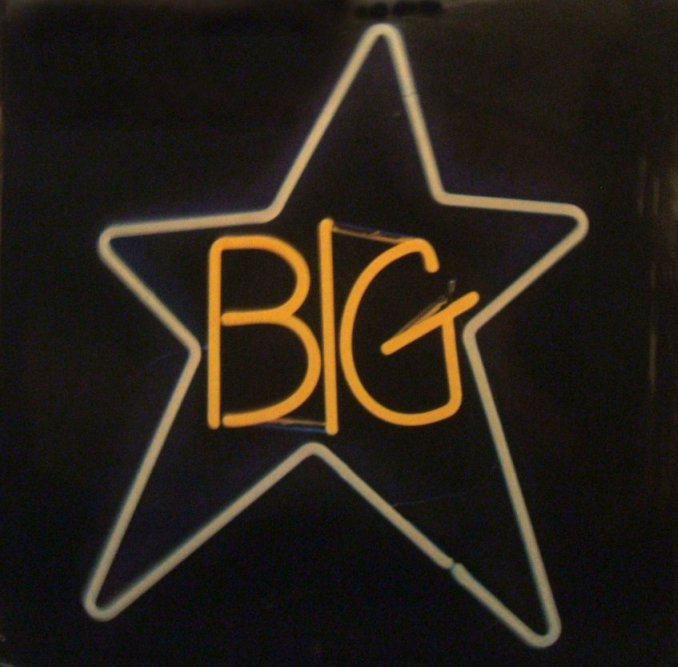
#1 Record - Big Star


#1 Record
Big Star
Ardent  ADS 2803
1972

This is the debut album by Big Star, one of the best debuts in rock history in my opinion.  The back cover photo was taken at Alex Chilton's parents' home in Memphis, the city that was also home to Ardent Records where this album was recorded.  This is a reissue by the Concord Music Group which acquired the Stax catalog (which distributed Ardent) when they bought Fantasy Records.  Given that original copies of this are rare and pricey, this is definitely worthwhile for most vinyl junkies.  Concord is a quality jazz label and they have done an excellent job on this reissue even reproducing the Ardent inner record label.  The pressing is first rate, the art is nice and the sleeve is sturdy cardboard.  Plus it is very reasonably priced, a bargain by today's standards.  Of course if there was any justice in rock history, it would be Jackson Browne and the Eagles albums that were impossible to find and original pressings of this would be as common as "Tapestry" at garage sales and flea markets.  If rock history was fair, the songwriting team of Bell/Chilton would be as famous as Lennon and McCartney or Jagger/Richards.  At least Alex Chilton lived long enough to become a cult hero, poor Chris Bell died in obscurity just prior to the resurrection of Big Star by the New Wave power poppers that finally helped give them their due.  My two favorite rock genres are psychedelic and power pop and when it comes to the latter this is basically nirvana.  Actually merely describing this as power pop, is misleading.  There is plenty of what is commonly recognized as power pop in terrific songs like "Feel," "Don't Lie To Me," "In The Street" and "When My Baby's Beside Me" all of which are better than just about anything you would have heard on AM radio in 1972 and should have been hit singles.  However there are also sensitive ballads like the beautiful "Thirteen," "Give Me Another Chance," "Watch The Sunrise" and "The Ballad of El Goodo" as well as the inspirational "My Life Is Right" and "Try Again" which sound like outtakes from "All Things Must Pass" only with more humility and better singing and then there is Andy Hummel's oddball "The India Song" which reminds me of Donovan.  With the release of the recent Big Star box set (awesome and highly recommended) and the quality reissues of their first two albums, this hard luck group is finally garnering the respect and recognition that they've always deserved.  If you've never heard this wonderful record, you owe it to yourself to buy it.  It is a true classic, better than 99 percent of anything you will hear on classic rock radio or any other radio for that matter.  It is a timeless record that I expect will be appealing to serious rock fans for generations to come.  Recommended for Nick Lowe fans who wish he wasn't such a smart ass.

Thursday, February 17, 2011

Nuggets: Original Artyfacts from the First Psychedelic Era, 1965–1968- Various Artists


Nuggets: Original Artyfacts from the First Psychedelic Era 1965 - 1968
Various Artists
Sire SASH 3716-2
1976

This is a reissue on Sire of the original Elektra release from 1972.  It has a different cover than the original, in this case a cool psychedelic cover by Kelley Mouse Studios reminiscent of their work for the Grateful Dead.  Rhino Records took the original Nuggets concept and expanded it hugely over numerous CD box sets many of which I happily own, but this original record still shines in its beauty and purity.  It is an incredibly important record for me, my rock bible.  It changed my life.  I barely knew what a garage band was when I bought it, I think the only group on the record that I had ever heard of was the Blues Project (hardly a garage band, their inclusion on this record is debatable, but I'm not complaining.)  The idea that a bunch of teenage punks could make better records than the Eagles or Peter Frampton never occurred to me, the garage bands at my school just played crappy covers by BTO or Neil Young, I couldn't conceive of anything good coming out of them.  Then I heard this and I realized how much the Eagles and Frampton actually sucked.  The music on this record blew me away.  Well before I heard the Ramones or any new wave bands, this record showed me that short, fun and fast rock songs trumped the pretentious and bloated music I was hearing on commercial radio stations or watching on "Don Kirshner's Rock Concert."  After I heard the Standells and the 13th Floor Elevators, how could I possibly want to listen to Styx or Kansas or any other crummy 1970s band?  This was the real thing, the holy grail of rock.  A relentless stream of classic music flowed from the turntable when I put this on.  I instantly became a fan of Nazz, the Electric Prunes, the Remains, the Chocolate Watch Band, the Mojo Men and the Leaves.  I've loved these bands with a passion ever since.  Every song on here even the most obscure and silly ones appealed to me.  From the Magic Mushrooms to the Castaways, there is not a dud on here.  The fact that so many of these songs barely charted and were largely ignored by the oldies stations, showed me that there was another rock music, the one that wasn't on the radio and or in the chain record stores, but rather the one that existed in used record stores, college radio stations and in the collectors magazines.  This record opened up the idea of alternative music, it paved the way for the punk revolution.  In fact this record's liner notes were the first place I ever encountered the term "punk rock."  This album is a model of its kind, the perfect compilation album.  It has a point of view, it is brilliantly curated and features wonderful and humorous liner notes from Lenny Kaye that I basically memorized from reading them so often.  It taught me so much, it influenced me so deeply, I'll always cherish this record.  Even though I own just about every song on it on a CD or a vintage vinyl album, I'll never part with it.  Recommended for classic rock fans who don't know what they are missing.

Tuesday, January 18, 2011

Jackie - Jackie DeShannon


Jackie
Jackie DeShannon
Atlantic  SD  7231
1972

My favorite of DeShannon's post-Imperial albums.  Her recording for Atlantic prompted my hope for a Jackie "Dusty In Memphis" type classic, but this record falls short, not much of a radical departure from DeShannon's classic sound, a bit more soulful for sure, but there isn't much here that would sound out of place on "To Be Free" or "Laurel Canyon."  DeShannon only contributed 4 songs, but 3 of them are among the best songs on the record:  "Vanilla 'Olay" should have been a hit, "Laid Back Days" is the rockinest song on the album and "Anna Karina" is a charming song that would be worthwhile for the song's subject alone.  The covers don't offer much.  I like her version of John Prine's "Paradise" mostly because I prefer her voice to his.  Her sweet genteel cover of Neil Young's "Only Love Can Break Your Heart" seems misguided to me and her pleasant version of Van Morrison's "I Wanna Roo You" is basically pointless - she can't sing better than him and her version offers nothing new.  All of the remaining songs are fine, sung tastefully with feeling but I've already forgotten most of them by the time the next song starts.  The record has a nice vibe as they used to say back in the 1970s and it sounds really good late at night.  I gave it a spin in the early afternoon and I got a little bored with it.  Recommended for Dusty Springfield fans who wish Dusty had stayed in Memphis.