Showing posts with label 1973. Show all posts

Tuesday, February 11, 2020

Golden Eggs - The Yardbirds


Golden Eggs
The Yardbirds
Trademark of Quality  TMQ-61001
1973

I often see this vintage bootleg selling for ridiculously high prices which, even as a Yardbirds collector myself, I think is absurd.  All of the tracks on here were originally commercially released and all of them have been easily obtainable on CD for many years.  I believe they are all available again on vinyl as well thanks to Repertoire Records' recent series of Yardbirds compilations (highly recommended by the way.)  Admittedly back in the mid-1970s a lot of this stuff was pretty hard to find although you could get most of it if you tried hard enough.  I bought this decades ago even though I already had most of it.  I bought it because I wanted to hear the two Keith Relf solo tracks.  I also liked the cover art and I got it at a bargain price.  I certainly don't need it any longer.  I keep it as a dumb collector thing even though it has a major flaw, namely all the stereo tracks were improperly recorded.  Only one of the two channels was dubbed on to the record and that channel comes out of both speakers when you play the album.  Thus either the vocals or some of the instruments are barely audible.  Fortunately only 8 of the 17 cuts are in stereo but it is still often annoying.  This reportedly is not true of all versions of this album, mine is apparently a bootleg of the bootleg.  The Eric Clapton era of the group is represented by two oddly chosen cuts from "For Your Love."  "Putty (In Your Hands)" is a minor song and "Sweet Music" is one of the worst songs they ever did.  "Putty" is in mono and sounds fine, but "Sweet Music" is the stereo version and Relf's vocal is buried deep in the mix so it sounds ridiculous.  The record jumps into the Jeff Beck era with "Steeled Blues" from 1965 which was originally the B-side on the "Heart Full Of Soul" single which is easy to find.  It is an instrumental credited to Beck but it is basically a generic blues given a lethargic treatment by the band although Beck and Relf (on harmonica) have their moments.  It jumps forward to the two songs from "Yardbirds" that Epic Records dropped for their version of the album "Over Under Sideways Down."  Both are in stereo so Beck's dazzling guitar work is generally too far down in the mix on "The Nazz Are Blue" and on "Rack My Mind" Relf's vocal is practically inaudible.  The Jeff Beck/Jimmy Page era of the band is represented by "Stroll On" from the "Blow-Up" soundtrack."  It is my all-time favorite Yardbirds track.  It is in mono so it sounds fine although I prefer the stereo version that I have on my copy of the soundtrack album.  The Jimmy Page era of the band makes up the bulk of the album which makes sense since it was the Yardbirds music that was hardest to find back in the 1970s.  There are four tracks from "Little Games" which are among my least favorite tracks on the album.  All are in stereo and suffer from the missing channel.  The jug band style "Stealing, Stealing" and the largely instrumental psychedelic song "Glimpses" both sound okay even with the missing channel.  On the poppy "Little Soldier Boy" Jim McCarty's vocal impersonation of a trumpet that runs throughout the song is buried deep in the mix which makes the song sound naked like a demo.  On the commercial sounding "No Excess Baggage" the lead guitar can barely be heard.  The album also features "Puzzles" which was the B-side of the "Little Games" single as well as the band's final singles "Ha Ha Said the Clown," "Ten Little Indians" and "Goodnight Sweet Josephine" along with the latter's B-side, "Think About It" written by Jimmy Page.  Relf wrote "Puzzles" which has a pop-psych sound and a sizzling Page solo and I think it is a lot better than many of the tracks that made it onto "Little Games."  "Ha Ha Said the Clown" was released in 1967 and features Relf with a bunch of studio musicians.  It sounds fine although it is not characteristic of the band's sound and I prefer the Manfred Mann recording of the song which this version closely copies.  "Ten Little Indians" was written by Harry Nilsson and also was released in 1967.  The album notes say that this is a stereo track but to me it sounds mono.  I like the way the song builds in strength and its slightly trippy arrangement, but it is far from essential.  "Goodnight Sweet Josephine" is bolstered by expansive use of phasing and is engaging but inane.  Its flip side is much superior, in fact "Think About It" is among the very best tracks the Yardbirds ever did, boasting a heavy riff and some smoking guitar work from Page that clearly anticipates his future work with Led Zeppelin.  Even though I generally disdain singles I paid five bucks to buy this 45 at Rather Ripped Records in Berkeley in 1980 and I still consider it one of my best scores.  The album also contains a 1966 single by Keith Relf.  The A-side is the moody "Mr. Zero" by Bob Lind which sounds nothing like the Yardbirds, but I still really like it.  Its B-side is a Relf composition entitled "Knowing" which is a chamber pop track that sounds a bit like the Zombies.  Despite all of this record's many flaws, the Relf single makes it worthwhile (although you can easily find it elsewhere on better albums.)  I can't recommended my version of this album because of its recording defect but even a properly recorded version is a dubious purchase.  The selections from "For Your Love" and "Little Games" are poorly chosen and frankly the inclusion of only legitimately released music as opposed to unreleased tracks or concert recordings makes this bootleg even more ethically questionable than a normal bootleg.  "Stroll On," "Think About It," "The Nazz are Blue" and "Rack My Mind" are essential tracks that every Yardbirds fan should own, but you should look for them elsewhere.  Not recommended to anyone but fanatics.

Saturday, October 12, 2019

My Tennessee Mountain Home - Dolly Parton


My Tennessee Mountain Home
Dolly Parton
RCA APL1-0033
1973

I bought this several years ago in an antique store in Jamestown, ND - the home of the World's Largest Buffalo (it is a giant statue.)  I sometimes buy country albums from the 1970s for artists I really like even though almost all of them were primarily singles artists.  If I were smart I'd just buy compilations.  The two big exceptions to that are Willie Nelson and Dolly Parton.  Since they mostly wrote their own material, their albums have a higher quality than the single plus filler formula most of their peers employed.  Parton made many fine albums in the 1970s but this is my favorite.  It is a concept album focused on her childhood.  The cover of the album depicts the house she grew up in and there is a picture of the home she was born in inside the gatefold along with pictures of her as a child as well as some family members.  It also has liner notes written by her father and mother.  The album begins with "The Letter" in which she recites a touching letter she wrote home when she first came to Nashville in 1964.  The only music is a harmonica playing "Home Sweet Home."  "I Remember" is a heartfelt tribute to her parents.  It is enhanced by her gift for evocative descriptions.  "Old Black Kettle" is a lively tune that describes cooking with the kettle of the title and provides a rosy picture of growing up in the country.  "Daddy's Working Boots" as you probably can guess pays homage to her hard-working father.  Parton has always had a way with symbols and metaphors and the boots serve that function in this song.  "Dr. Robert F. Thomas" is an ode to the doctor who delivered her as a baby.  The song celebrates his good deeds and perseverance as a country doctor.  Side one concludes with "In the Good Old Days (When Times Were Bad)" which is a remarkable song that vividly describes her hardships growing up with mixed feelings of nostalgia and relief as reflected in the chorus when she sings "no amount of money could buy from me the memories that I have of then, no amount of money could pay me to go back and live through it again."  The song is an old song that she originally released as a single in 1968 but it fits the theme of the record so well it is hard to blame her for wanting to re-record it for this album.  On a record suffused with nostalgia, it provides some much needed realism.  Side two begins with "My Tennessee Mountain Home" which was the single off the album.  It is an idealized vision of her childhood that has great resonance.  Its emotional impact is a testament to her genius as a songwriter and a performer and it is one of my favorite songs in her enormous catalog.  "The Wrong Direction Home" describes how she misses her mountain home.  In "Back Home" she joyously does return home.  "The Better Part of Life" is more nostalgia enlivened by her richly expressive remembrances.  "Down on Music Row" recounts her early experiences in Nashville.  The story she tells is very detailed and celebrates RCA which is a little misleading since she did not sign with RCA until years later.  Still it makes for a happy ending and gives the album some satisfying closure.  I have to admit that the sentimentality and nostalgia that permeates this album would probably annoy me in the hands of a lesser artist.  Parton's skill with imagery and her incomparable sincerity as a vocalist are able to convince a city-slicker like me that she really did have a wonderful childhood growing up impoverished in the country.  It also helps that her musical accompaniment is so tasteful and subdued, allowing her voice and the lyrics to convey the feelings in the song.  She is so full of love for the subjects of her songs, that she charms me and persuades me of the truth of her vision.  This is a flawless album that is essential for Parton fans and recommended to anyone looking for a little warmth and affection to brighten up their lives.

Wednesday, July 30, 2014

Attempted Mustache - Loudon Wainwright III


Attempted Mustache
Loudon Wainwright III
Columbia KC 32710
1973

A few weeks ago I saw Loudon Wainwright III play a delightful show at Levitt Pavilion.  It was just him and his guitar.  He primarily did his newer songs which tend to focus on death, decay and depression as he proudly admits.  He seems to be reveling in being a nasty old curmudgeon.  All of my Wainwright records are from the 1970s when he reveled in being an obnoxious young smart aleck.  Then and now his saving grace was his humor and self-deprecating style.  He did do one song off this album, the lead track, "The Swimming Song" which sounded great on a warm summer night in Los Angeles.  On the album it is driven by a banjo and features a rhythm section that gives it more oomph than his solo performance but not as much charm.  "A. M. World" is a raucous tune that reminds me of Randy Newman the way it blends noisy rock with a music hall style tune.  Its rich sarcasm is also suggestive of Newman as it mocks rock stars including a dig at Neil Young. "Bell Bottom Pants" is dedicated to the United States Navy presumably since sailor pants were supposedly the inspiration for bell bottom pants.  The hideous fad for the pants in the 1970s is the subject of the song.  "Liza" is about Wainwright's childhood friendship with Liza Minnelli and how he drove her around in her toy electric Thunderbird.  The song is sung a cappella and sounds like an old folk song.  Oddly enough, Wainwright's son Rufus also recently wrote a song about Minnelli, "Me and Liza."  "I am the Way" is based on Woody Guthrie's "New York Town" which was about a guy down on his luck in New York City but still bragging about his romantic prowess.  Wainwright changes the words to be about Jesus although he still brags about his romances (Mary Magdalene).  The song was recorded live in concert and captures Wainwright's engaging charm as a performer.  It is my favorite track on the album.  In "Clockwork Chartreuse" Wainwright riffs on Kubrick's film "A Clockwork Orange" describing a couple of louts itching for some ultra-violence.  Wainwright rocks out on this one.  Side two opens with the bluesy "Down Drinking at the Bar" which mocks an alcoholic.  With its honky-tonk piano and howling guitars it is one of the strongest songs on the album from a musical standpoint.  The epic "The Man Who Couldn't Cry" is the strongest song from a lyrical standpoint.  It is loaded with black humor as Wainwright sings about a guy who cannot cry despite all the awful things that happen to him in the song.  He only cries when it rains and when a massive storm comes he cries until he dies of dehydration.  He goes to heaven and bad things happen to all the people who wronged him in the song.  It sounds silly, but the spare acoustic guitar riff and Wainwright's compelling vocal make the song powerful.  "Come A Long Way" was written by Kate McGarrigle who was married to Wainwright at the time.  The song is about a break-up and is a lot more earnest and poetic than is typical with Wainwright.  In "Nocturnal Stumblebutt" Wainwright has insomnia and is clumsily roaming his house in the dark looking for a cigarette while trying not to disturb his sleeping wife.  He finally finds one and concludes the song telling his wife "just to show I love you, not gonna look for an ashtray baby, gonna use your shoe."  Ha-ha, what a prince!  The song has a funky, swampy sound to it that I find appealing.  "Dilated to Meet You" is a greeting to his new born son Rufus delivered with some good-natured humor.  Appropriately McGarrigle sings harmony on the low key song which I think is a charming addition to the song.  Charm is entirely absent from "Lullaby" which is also directed at baby Rufus but it is considerably meaner essentially ordering him to shut up and go to sleep.  The nastiness of the lyrics is leavened a bit by the mellow music and a laconic vocal from Wainwright.  Throughout his career Wainwright has used his life and family for song fodder which probably isn't very pleasant if you are related to him.  He can be nasty but he does not spare himself either as was evident in his concert where he presented himself as a broken down old man with depression issues.  He may be an asshole but I admire his candor and with his knack for humor I'm inclined to be more tolerant of some of his excesses.  At least he's not boring, that's for sure.  Recommended to people who think Bob Dylan is too nice.

Saturday, October 19, 2013

The Best of Ian & Sylvia - Ian and Sylvia


The Best of Ian & Sylvia
Ian and Sylvia
Columbia  G32516
1973

Is this really the best of Ian and Sylvia?  Of course not, anyone who is even a casual fan of the duo knows that the best of Ian and Sylvia was recorded for Vanguard Records.  If you read the fine print on the back cover you will see that this double record set repackages Ian and Sylvia's two albums for Columbia Records, "Ian & Sylvia" and "You Were On My Mind."  Neither album sold many copies, so presumably some weasel at the record company decided to recoup the losses by deceptively marketing the albums as a greatest hits package.  Being a huge fan of Ian and Sylvia, I knew this was a rip-off when I bought it, heck that is part of the reason I bought it.  I like to collect examples of the major record labels' greed and evil chicanery.  Mostly I bought it because it was really cheap and when I found it in a Pasadena record store many years ago, I had yet to acquire a copy of "You Were On My Mind."  I figured I would buy it and then discard it when I finally did acquire a copy of "You Were On My Mind."  However when that finally happened, I found that I didn't want to part with it, just one of those irrational collector things.  The album is not entirely without value to someone who has the two Columbia albums already.  Bob Palmer's lengthy liner notes are quite good and you get a bunch of leftover photos from the photo session for "Ian & Sylvia," but really I just keep it because I'm a completist.  I've already blogged about the two Columbia albums, so I won't rehash them here, but even though this music is marginal compared to the classic Vanguard albums, it is still worth having, especially if you like country rock.  If I was making up a double record set of Ian and Sylvia's best recordings, I'd probably try to squeeze on a few of the Columbia tracks, in particular the remake of "Summer Wages," "Barney," "Bill (Won't You Please Take Me Home)," and especially "Everybody Has To Say Goodbye."  Recommended to Ian and Sylvia fans who can't find copies of "Ian & Sylvia" or "You Were On My Mind." 

Friday, March 22, 2013

(pronounced 'lĕh-'nérd 'skin-'nérd) - Lynyrd Skynyrd


(pronounced 'lĕh-'nérd 'skin-'nérd)
Lynyrd Skynyrd
MCA 363
1973  

Yikes another classic rock entry, I guess I'm turning into an old fogey.  I was watching a DVD compilation of "The Old Grey Whistle Test" (that DVD series is excellent by the way) and I saw Lynyrd Skynyrd deliver a thrilling performance of "Free Bird."  It really got me bopping.  The song has basically become a joke punchline, but I still love it as much as I did when I was a teen.  I first became aware of Lynyrd Skynyrd in the 7th grade when I was living in Salt Lake City.  My best friend was a fellow outcast named Billy Jo.  He had just moved there from the south.  I had just come from California and we both hated our new hometown.  We bonded over our alienation from the local culture.  I was into the Beatles and not paying attention to contemporary music very much, Billy Jo liked these guys.  "Sweet Home Alabama" was his personal theme song just as "California Dreamin'" was mine.  I came to like his song as well.  I moved back to California and lost touch with Billy Jo but I still liked his favorite band and bought this album when I was in high school after hearing "Free Bird" on the radio.  It was their debut album and to my mind one of the best debut albums of its era.  It opens with "I Ain't The One" by lead vocalist Ronnie Van Zant and guitarist Gary Rossington.  It is the familiar pop music tale of a guy running away from his girlfriend when she wants to get married.  In classic southern rock fashion it is driven by a catchy guitar riff with a funky rhythm track.  This band had two lead guitarists and they play up a storm.  Thematically "Tuesday's Gone" is pretty similar except this time it is the girlfriend who wants to be free.  It was written by Van Zant and the band's other lead guitar player, Allen Collins.  The tune is a lot slower and I miss the propulsive guitar noise of the previous track, but Van Zant's vocal is very expressive.  It runs about seven and a half minutes and I lose interest way before that.  Nonetheless it is one of the prettiest songs they ever did.  Van Zant and Collins also offer up "Gimme Three Steps" about a guy who is dancing in a bar with a lady when her boyfriend shows up with a gun.  This song features a return to rocking riffs and guitar noise.  The song's humor and funky underbelly make it a real winner.  Rossington and Van Zant close out the side with the majestic "Simple Man" in which a guy is advised by his mother to lead a simple moral life and to remember that God is watching from above.  As a cynical city slicker I don't really dig the language of the song, but I can relate to it and I appreciate the heartfelt way Van Zant sings it.  Unlike a lot of hard rock bands, these guys still retain their power when they slow things down and the pounding riff that runs through the chorus is very effective.  Side one is practically flawless, four memorable songs that vary in tempo and style but which flow together very naturally.  This is why I dig albums.  Side two is a bit of a let down in comparison.  It starts with the country-flavored social protest song "Things Goin' On" by Van Zant and Rossington.  Billy Powell's honky tonk piano solos are the most interesting part of the song for me.  "Mississippi Kid" is a collaboration between Van Zant, the album's producer Al Kooper and drummer Robert Burns.  It is a retro country blues style song about a gunslinger on his way to Alabama to pick up his girlfriend.  It is derivative to be sure, but I still enjoy it.  Rock returns for "Poison Whisky" by Van Zant and Ed King who plays bass on the album, but who would become the group's third guitarist on future albums.  King was the most unlikely member of the band.  He was no good ol' boy but rather a Californian who had been in the 1960s pop-psych band, the Strawberry Alarm Clock.  The song is another riff driven tune that advises against frying your brain with bad whisky.  It sound generic, the weakest song on the album.  It is followed by the album's final song "Free Bird" by Collins and Van Zant.  If you are a white suburban kid of my generation you have heard this song a gazillion times.  It is a banal song from the so-long-babe-I-gotta-ramble school.  I find it kind of obnoxious in that regard.  Musically though it is magnificent.  Structurally it is in two parts, a slow haunting ballad sung with a lot of feeling by Van Zant which is dominated by mournful slide guitar lines from Rossington followed by a fast paced hard rock workout featuring a thrilling and seemingly endless guitar solo from Collins that will provide a challenge for you air guitarists out there and which will strain your fingers if you tackle the song in "Rock Band."  The song goes on for nine minutes on the LP and it fades out with the band still going full throttle which I think is a mistake.  When you hear live versions of the song, it is more satisfying to hear the song driven to its conclusion no matter how long it takes.  Poke fun if you like, but this song is what rock is all about, screaming guitars, fast paced beat, pounding drums, relentless drive, it is so full of energy and vitality it makes you feel good to be alive.  When I get tired of hearing this song, it will be time for me to check out.  Lynryd Skynryd were truly one of the best bands of their era.  It was a time when hard rock bands were a dime a dozen, but they stood out by virtue of their superior songwriting and their intoxicating blend of country, Memphis soul and straight ahead rock and roll.  So much of the music of that time sounds stale and lifeless to me, but this band still pushes all my buttons.  I grew up in the 1970s largely hating the decade, but I have to admit that if the decade produced a few albums as good as this one, it couldn't have been all bad.  Recommended to children of the 1970s who are tired of boomers telling them how great the 1960s were.

Sunday, April 29, 2012

On The Road - Traffic


On The Road
Traffic
Island ISLA 2
1973

I've mentioned in the past how I spent the 1970s wishing it was still the 1960s.  Until the New Wave started, I paid little attention to the contemporary music scene and I had little interest in hearing about the musical tastes of my peers.  They could have their precious Frampton and the Eagles, I had the Beatles and the Byrds.  Occasionally stuff would filter through though.  I was a freshman sitting in Spanish class in high school when I heard a sophomore mention that his favorite group was Traffic.  My ears perked up.  I had yet to hear the band but I knew from my rock encyclopedias that they were a group from the 1960s.  This sophomore was smart so I respected his judgment more than most of the dunces at my school and I made a mental note of his favorite Traffic album which was a live double called "On The Road" that was recorded on the band's German tour in 1973.  He rhapsodized about the extended cuts and the superlative playing on the record.  I didn't rush out and buy it, I wasn't that easily swayed, but I kept my eyes open and when I came across a used copy a few years later I did buy it.  I was hugely disappointed.  I expected rock and roll jams, but this sounded like jazz.  I came close to getting rid of it.  Later I bought the earlier Traffic albums, in particular, "Mr. Fantasy" and became a modest fan of the group's early work.  I warmed up a little toward this album which bears little resemblance to the more psychedelic and folk-rock sound they had in the 1960s mostly because I started to like jazz.  Nonetheless it hasn't spent much time on my turntable even though I've had it for over 30 years.  Instrumentally the album is very strong.  Aside from the core group of Steve Winwood, Jim Capaldi and Chris Wood the group is supplemented by a formidable rhythm section of Roger Hawkins on drums, Reebop Kwaku Baah on percussion and David Hood on bass as well as Barry Beckett on keyboards.  These guys really cook when they get going, the problem is that don't get going that often.  There are only seven songs spread over four sides of vinyl, so there are some lengthy workouts but most of the jamming doesn't go anywhere.  The album opens with a nearly 16 minute long performance of Winwood's "Glad" that segues seamlessly into the Winwood/Capaldi song "Freedom Rider" both songs coming from "John Barleycorn Must Die."  "Glad" is an instrumental that begins with a fast paced section that I find exciting before slowing into a more subdued, melodic passage that I think is boring.  The uptempo portion of the song features some dynamic interplay between Winwood and Beckett's keyboards and demonstrates the propulsive power of the percussion section of the group, however Chris Wood's sax solos seem largely pedestrian to me.  With its percussive energy it reminds me a bit of Santana in their jazz-rock phase.  "Freedom Rider" is shorter and punchier and it features Winwood singing instead of just jamming which I prefer.  I even dig Wood's flute solo.  This is my favorite cut on the record (and not just because it is the shortest, although that helps.)  Side two features a pair of songs from "Shoot Out at the Fantasy Factory".  Chris Wood's "Tragic Magic" is a meandering and monotonous instrumental that doesn't do anything for me and a ten minute version of the Winwood/Capaldi "(Sometimes I Feel So) Uninspired" just serves to remind me of how appropriate that title is for the song.  The song is partially redeemed by a searing Winwood guitar solo, but for the most part it is sheer tedium.  Side three is better with more rocking out.  The title track from "Shoot Out at the Fantasy Factory" benefits from the percussive punch offered by the guest players.  It starts out rocking and I like Winwood's soulful vocal.  The inevitable ensuing jam is energetic although it goes on too long.  Capaldi's "Light Up or Leave Me Alone" (off "The Low Spark of High Heeled Boys") features a vocal from Capaldi who isn't much of a singer but is adequate for the task.  At more than 10 minutes long, the song is twice as long as the studio version but some of that time is devoted to introducing the band.  The song is the hardest rocking song on the album and there is a greater emphasis on Winwood's guitar solos than on Wood's reed work which definitely meets with my approval.  Unfortunately the record takes a turn for the worse with side four and a seventeen minute long version of "The Low Spark of High Heeled Boys."  The original song was not all that strong to start with and it doesn't offer much depth for extended soloing but that doesn't keep the band from going off the deep end anyway.  I find all the noodling around to be sleep-inducing although the song does finish with surprising force if you can stay awake that long.  I like this record a lot more than I did when I was a teenager, but I still have limited use for it.  If I want to hear jazz-rock I'd rather listen to Miles Davis or the Mahavishnu Orchestra and if I want to hear jams, I reach for the Grateful Dead or Peter Green's Fleetwood Mac.  Recommended for fans of Weather Report and Return to Forever.

Monday, February 28, 2011

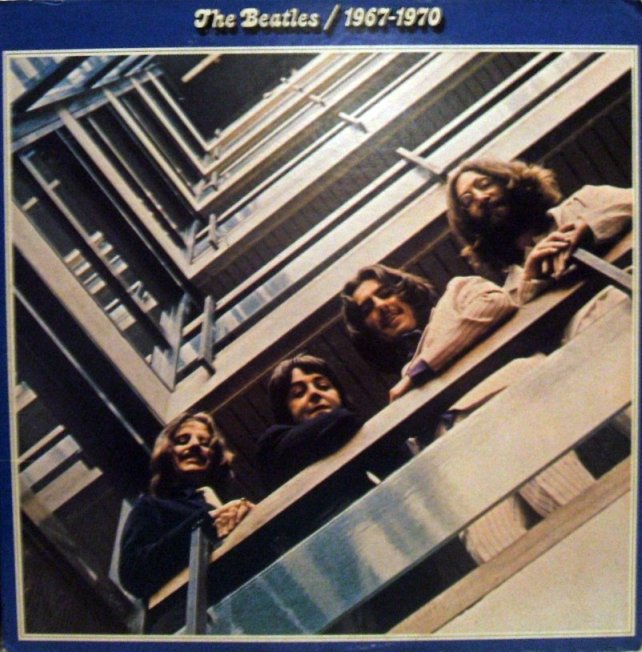
1967 - 1970 - The Beatles


1967 - 1970
The Beatles
Apple SKBO-3404 
1973 

This is the companion volume to "1962 - 1966."  It was the second Beatles album that I bought and my fourth album in my collection.  Again, I wore out my original copy and replaced it with this copy.  This era is even more poorly represented by the "1" compilation than the earlier era is.  There is nothing from "Sgt. Pepper" and it does not include "Strawberry Fields Forever."  In my opinion "Strawberry Fields Forever/Penny Lane" is the greatest single in the history of rock music so its exclusion from "1" just proves the foolishness of the concept behind that comp.  "1" also omits such essential classic cuts as "I Am The Walrus," "While My Guitar Gently Sleeps" and "Here Comes The Sun."  I prefer "1962 - 1966" to this album simply because it is more perfect.  "Old Brown Shoe" and "Octopus's Garden" do not belong on a best of record and while "Ob-La-Di, Ob-La-Da" and "The Long and Winding Road" do belong there, I don't like them very much.  On the other hand, side 1 of record 1 is probably my favorite slab of Beatles vinyl in existence.  I played it more than any other side of either of these comps.  It is a relentless stream of classic psychedelia.  It was not the first time I had heard psychedelic music, there were a few cuts on my "Get It Together" comp like "White Rabbit" and the Vanilla Fudge's cover of "You Keep Me Hangin' On," but this was when I really took notice that this was a different sort of music and that I liked it a lot.  "A Day In The Life" and "Strawberry Fields Forever" in particular blew me away.  I'd never heard anything like them and I've basically spent the rest of my record collecting life looking for songs that good, without much success.  These albums came with lyric sheets on the inner sleeves and this was the first time I can remember studying lyrics trying to figure songs out.  "1967 - 1970" was also the first time I realized that rock music could be complicated, even serious, it was not just the kids' stuff they played on top 40 radio.  This record enslaved me to the Beatles.  To start out one's collection with these two albums, is to start upon the very apex of rock music.  It was all downhill from here, ha-ha.  That is not literally true, I've heard lots of great pop music after this, but I've never heard anything better.  No record has ever thrilled and fascinated me the way these two albums did.  I played them more than any record I have ever owned.  They literally changed my life.  Like "1962 - 1966" this is essential music that every pop fan should own.  Recommended to anyone who has ever wanted to be turned on.

1962 - 1966 - The Beatles


1962 - 1966
The Beatles
Capitol SKBO-3403 
1973

My first Beatles album and the third album I ever bought.  My original copy is long gone, worn out from excessive playing on a cheap phonograph.  I bought a replacement copy in the early 1990s, mostly because of nostalgia since I already had every song on here on other vinyl albums.  My original copy was on Apple, but this is the later Capitol pressing.  This is perhaps the ideal introduction to the Beatles, it is greatly preferable to the more recent comp, "1" which lacks such crucial early songs as "Please Please Me," "Norwegian Wood," "Nowhere Man" and "You've Got To Hide Your Love Away."  This record certainly served me well.  I got countless hours of enjoyment from it.  The music on here was so mesmerizing, so different from the music I knew on the radio, it was truly enchanting.  I played it endlessly marveling at the Beatles' eclecticism and sheer charm.  So many wonderful songs flowing one after another, an incredible display of songwriting genius, I had struck the mother lode.  It was like opening Pandora's Box, I was now hooked forever on the Beatles.  This record cheered me up so many times during my unhappy sojourn in Salt Lake City, it transported me out of my hateful existence to a much better place and for that I loved the Beatles as if they were my brothers.  As a kid not knowing anything about the Beatles' personal lives, I naively assumed that the picture in the gatefold featured them posing with their families.  I stared at the picture speculating who was related to which Beatle based on family resemblance.  Of course the picture is no such thing, but rather it is just a bunch of lucky strangers posing with the Fabs in the garden of St. Pancras Church in London, one of the many locations they visited during the celebrated "Mad Day Out" photo session in July 1968.  It remains one of my favorite Beatles pictures.  I still enjoy this album, I might quibble about some of the tracks and lots of my favorites are not on it, but it is still a nice mix of music, well-chosen and presented in chronological order which really helps one appreciate how rapidly the Beatles grew musically during those 4 years.  If you don't know this music already, I'm not sure why you'd be reading this blog, this is the most essential music in the history of rock.  It should be the cornerstone of any rock record collection.  If you are a Beatles fan, you must have it and if you are not a Beatles fan, then what the heck is wrong with you?  Recommended for everybody who likes pop music.

Tuesday, February 22, 2011

Ringo - Ringo Starr


Ringo
Ringo Starr
Apple  SWAL-3413
1973

Another souvenir from my time in Salt Lake City.  It was the sixth album I ever bought.  I even bought it before I bought "Sgt. Pepper" so the cool cover reference escaped me.  I remember quite vividly hearing "Photograph" on the school bus (they played the top 40 radio station for us) and being very moved by it.  Even though it is about a girl, I projected into it my missing California, my old friends and my father.  I think it is one of Ringo's most memorable songs, co-written with George Harrison, it is among the best songs either man ever wrote.  The other hit singles on this, "Oh My My" and "You're Sixteen," don't really do much for me although they are pleasant enough and suit Ringo's voice quite well.  The album's producer Richard Perry had a knack for matching artists with material and musicians that brought out the best in them.  The real gems on this record come from Ringo's ex-mates in the Beatles, particularly Lennon's "I'm The Greatest" and McCartney's "Six O'Clock" which are first rate.  "I'm The Greatest" is self-referential and loaded with mentions of the Beatles and Ringo's solo career.  Its brashness and self-confidence are more typical of Lennon than Starr, but Ringo nonetheless manages to pull it off quite well.  "Six O'Clock" is superbly romantic with a lush arrangement that reflects Paul's pop smarts and it features prominent background vocals from Paul and wife Linda.  Harrison's "Sunshine Life for Me" and "You and Me (Babe)" are less impressive but since they beat anything on "Living in the Material World" or "Dark Horse" I respect Harrison's generosity in parting with them and of course he deserves a lot of credit for "Photograph."  "You and Me (Babe)" in particular seems tailor-made for Ringo's voice and persona and I find his performance of it very charming.  "Devil Woman" which Starr wrote with Vini Poncia is the only real sour note on the album, its obnoxious misogyny seems out of character for the typically good-natured Starr.  The album is beautifully packaged from the colorful cover to the handsome lyric booklet which features charming illustrations of the songs by Klaus Voormann.  At the time this seemed like the closest thing to a Beatles reunion that there would ever be and that certainly adds some resonance to the music, but it is a fine album in its own right, proof that Ringo could do pretty well with a little help from his friends.  Recommended for Beatles' fans yearning for another fix.

Sunday, February 20, 2011

Band On The Run - Paul McCartney and Wings


Band On The Run
Paul McCartney and Wings
Apple SO-3415
1973

Another seminal record in my life.  It was the second album that I ever bought.  It came out during a difficult time in my life, my parents had divorced and my mom had uprooted us from California and moved us to Salt Lake City, a place I absolutely loathed.  During this miserable period, I discovered the solace of pop music.  I knew about the Beatles, but this was when I became a real fan of them.  I saw "Help" on television and was enthralled by it and then I heard "Helen Wheels" on the radio.  I was still listening to top 40 AM radio and hearing lots of crap.  With its propulsive melody and joyous chorus "Helen Wheels" sounded so fresh and exciting to me, I was thrilled whenever it came on and I was disappointed when it was not a chart-topping hit.  I did my part, calling in to request it with some frequency.  When I saw this album in the store, I spent my allowance money and bought it.  By then "Jet" was on the radio and I loved that even more.  Its mixture of rock thunder and pop smarts blew me away.  I couldn't believe it was not number one on the charts either.  Back then stuff like that actually mattered to me.  I was offended that Elton John ranked higher than McCartney.  Finally the "Band on the Run" single made it to the top of the chart and I felt vindicated.  None of the kids I knew liked McCartney, they liked Elton John, the Eagles, Chicago or if they were a little bit cool, Lynyrd Skynyrd or Led Zeppelin, it made me feel special and triumphant when Paul finally succeeded.  Such a terrific song.  Its dynamic shifts in tempo and clever lyrics made the song really stand out among all the dreck on the radio at the time.  I really loved this album, it is still my favorite McCartney record.  I played it all the time and it helped me through a difficult year.  I had the poster from it hanging in my room for many years.  I stared at the snapshots on it and wondered about the stories behind them.  I still consider this basically a flawless record, I like every song to varying degrees.  I saw McCartney in concert during his last tour and he performed most of the songs on here and I was impressed at how fresh and vital they still sounded even in comparison with the Beatles songs he was doing at the show.  Besides the three singles, there are plenty of good songs on the album.  "Let Me Roll It" is a majestic song that employs heavy reverb reminiscent of John Lennon's records with Phil Spector.  "Nineteen Hundred and Eighty Five" is my favorite song on the record after the 3 singles.  It is driven by a rollicking piano line in classic rock and roll style upon which McCartney layers synthesizer lines and brass to create a powerful conclusion to the album leading in to a brief reprise of the title tune as a coda.  "Mrs. Vanderbilt" has a jaunty tune that mixes music hall with world music with surprisingly good results.  "Mamunia" is similar but more laid back.  It is typically McCartney-like in its outlook as it emphasizes focusing on the positive when confronted with the negative.  "No Words" was written by McCartney with fellow Wing Denny Laine.  It has a nice riff but is otherwise little more than filler.  I didn't like the gentle "Bluebird" very much as a kid, but I like it better now, especially the lovely vocal work.  The music hall sing-a-long "Picasso's Last Words" appealed to me even less back then, but I appreciate its warmth and sentiment now that I'm more mature.  I'm pretty sure I didn't even know who Picasso was back then.  As a young teenager a lot of the lyrics on this record were over my head (I had to look up what a "suffragette" was) but as I got older I came to realize that they are some of McCartney's finest lyric writing.  With their recurring themes of escape and freedom and their consistent craftsmanship and sophisticated imagery, they are an outstanding example of the artistry that the rock album is capable of.  I will always be grateful to Sir Paul for this record, it taught me the power and comfort in pop music and his cheery vision made a lot of bad days seem not so bad.  Recommended to Elton John fans who wouldn't recognize a pop genius if he hit them over the head with a copy of "Goodbye Yellow Brick Road."

Sunday, February 6, 2011

Get It Together! - Various Artists


Get It Together!
Various Artists
RCA Special Products DLP2-0045
1973

The first rock album I ever owned, it has immense sentimental value for me and was highly influential on my early record collecting.  I was a child of the 1960s but I barely remember the 1960s at all.  I have plenty of memories from then, but they might as well be from 1950s or 1970s.  I lived 20 minutes away from Haight-Ashbury in 1967 yet I never knew the Summer of Love even happened until the mid-1970s.  I had two hippie uncles but I just thought they were scary and I wouldn't go near them.  My only memories of the Beatles during their lifetime as a band was their cartoon on Saturday morning.  I didn't know about the anti-war movement until Kent State happened.  My parents and my neighborhood were as square as they come.  My Dad liked Sinatra-style crooners and mariachi music, my Mom liked classical music and mainstream jazz like Shelly Manne and Ella Fitzgerald.  The only rock record my Dad owned was the first the Mamas and the Papas record and he got that after they had already broken up.  I associated the 1960s with kids songs like "Puff The Magic Dragon" and "Tie Me Kangaroo Down, Sport" and the Monkees.  By the time I owned my own radio, it was the 1970s.  Then in 1973 I started seeing television commercials for this record and it blew my mind.  I heard excerpts of "Get Together," "Somebody To Love," "Born To Be Wild" and "White Room" and they thrilled me.  I realized there was a lot more to music than the crap I was listening to on the local top 40 radio station.  Plus it had "Daydream Believer" on it and at the time the Monkees were completely out of print, my record store didn't even carry the old Colgems comp.  I had to have this record.  My parents had just gotten divorced and money was really tight at my house, but my mom finally agreed to shell out the $5.99 plus shipping and handling and I'll be forever grateful.  When this double record set arrived, my world had changed forever.  I listened to this over and over, mesmerized.  I suddenly hated the music on the radio, I was only interested in the music of the 1960s.  This record became my road map into what is still my favorite era of music.  After hearing their songs on this comp, I started buying albums by the Who, Jefferson Airplane, Cream, the Rascals and the Kinks.  Ultimately I ended up buying albums from every artist on here except Music Explosion and Buddy Miles.  I probably will end up with those two as well, I'm just not in any big hurry anymore.  Admittedly I ended up with a few lemons, the Zager & Evans album is pretty awful, but for the most part the original albums were worthwhile.  I doubt that I ever would have bought the John Fred album "Agnes English" were it not for his inclusion on this record and it is a real gem.  I can't really recommend a 1960s comp that claims to represent "The New Rock Music" but has nothing from the Beatles, Beach Boys, Dylan, the Byrds, the Rolling Stones, Zombies, Grateful Dead, Hendrix or CCR to name a few, yet features no less than 3 songs by the Guess Who as well less than essential artists like Four Jacks and a Jill, Los Bravos, and Zager and Evans.  Nonetheless I do love this record and I still play it occasionally, not just as an exercise in nostalgia, but because it is a nice mix of music.  You could do a lot worse than this as far as 1960s comps go, especially one that was sold on TV.  Recommended to people who don't know the music of the 1960s very well but stumble across this at a garage sale or a flea market.